Some of you may remember that earlier this year in February 2026, I launched a Benchmarking Survey about PAT Testing in Repair Cafes across the UK. I am really pleased to say that after crunching the results, I’ve now published a report which you can access here at https://linktr.ee/leightonbuzzard and the results were published on International Repair Day 2026. Read more below.
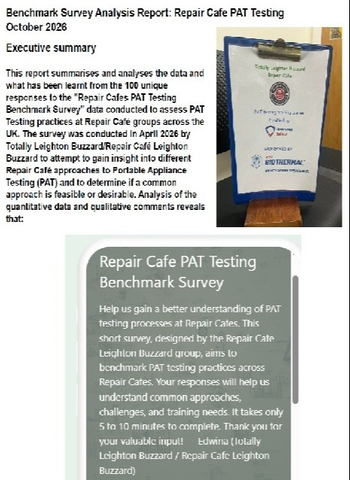
 How do UK Repair Cafes handle PAT Testing? To mark #InternationalRepairDay today on Saturday 17th October, @TotallyLeightonBuzzard are releasing the findings from a nationwide Repair Cafe PAT Testing Benchmark Survey, drawing insights from 100 unique Repair Café groups across the UK!
Key takeaways from the report:
 PAT Testing is very common at Repair Cafe but approaches vary
Operational bottlenecks csn cause headaches
Clear opportunity exists to share best practices
Strong demand exists for practical help (eg more guidance) for Repair Cafes
A massive thank you to all the Repair Cafe groups who took part. Together, we can keep community repairs safe, practical, and thriving! 

If you have any follow up questions then please reach out to me via Totally Leighton Buzzard (totallyleightonbuzzard@gmail.com) or contact me via social media on Facebook or Instagram.
Ed Osborne
Totally Leighton Buzzard / Repair Cafe LB